Brazilians in general espouse the traditional religious values held dear by the Roman Catholic Church. One of the most important of these values is the family. Perhaps more influential in Brazil than in any other Latin American country, the family has been the single most significant institution in the formation of Brazilian society.
The meaning of “family” in Brazil is not limited to the immediate family, but instead includes the entire parentela, or extended family, from both the mother’s and father’s side. This group can consist of hundreds of people, and it supplies the foundation for the individual’s social structure. It is not unusual to see many generations living together under one roof, or at the least in the same neighborhood or city. It’s customary for children to live with their parents until they marry, even though this has been changing recently, especially in the big cities.
Loyalty to one’s family is the individual’s highest-ranking obligation. The traditional family is male-dominated, although today, for economic reasons, many women work outside the home, and singleparent families are common.
Other traditional dominant values in the Brazilian society include community, collectivism, procreation and a hierarchical society. As anthropologist Roberto DaMatta has commented, in Brazil the attitude is one of “Don’t you know who you’re talking to?”, while in the United States it is more along the lines of “Who do you think you are?” This depicts the difference between the egalitarian society in the United States and the hierarchical society in Brazil.
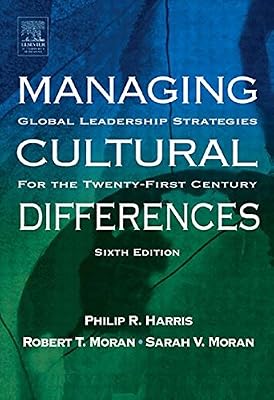
Extracted from
Robert T. Moran, Philip R. Harris & Sarah V. Moran, Managing Cultural
Differences: Global Leadership Strategies for the Twenty-First Century, p.
329 (Elsevier Science, 2004).
Vocabulary📚
value - valores- held - manter, dar suporte hundreds - mais de 100under one roof - Sob o mesmo teto - male - homens -
___________________________________________________________________________
___________________________________________________________________________
___________________________________________________________________________
2. Leia as primeiras linhas do texto: qual é o seu tema principal?
( ) A típica família americana em comparação com
a família brasileira
( ) A importância da religião no Brasil
( ) A influência da família na estrutura da sociedade
brasileira
( ) A diferença entre as sociedades americana e
brasileira
3. Leia as sentenças, encontre evidências no
texto para apoiá-las ou contradizê-las e, em seguida, marque (verdadeiro) TRUE (T) ou (falso) FALSE (F).
a. As famílias no Brasil são centradas no homem.
b. A família no Brasil provavelmente é mais influente do que em outros países latino-americanos.
( )
c. As crianças brasileiras geralmente saem de
casa apenas quando se casam.
d. A sociedade brasileira é mais igualitária do que a americana. ( )
4. Você concorda com as frases marcadas como
verdadeiras no exercício 2? Justifique a sua resposta.
___________________________________________________________________________
___________________________________________________________________________
___________________________________________________________________________
5. Escolha a resposta correta.
1. O texto é um trecho de
( ) uma revista. ( )| um livro.
2. Este texto pode ser classificado como
argumentativo porque o objetivo dos autores é de
( ) Apresentar uma ideia exemplificando seus
argumentos.
( ) Apresentar uma ideia mostrando seus efeitos
nas pessoas.
3. O tempo verbal usado para apresentar a ideia
do texto é principalmente
( ) O presente simples ( Simple Present)
( ) O passado simples (Simple Past).
🔴PAY ATTENTION!🔴
Certas palavras e pronomes, como this, that, he, she, it, etc., podem ser usados em um texto para se referir a uma ideia mencionada anteriormente.
6. Leia o texto novamente e verifique a alternativa correta.
1. A palavra GRUP na frase This group can consist of hundreds of people... ... refere-se a:
( ) a família extensa por parte da mãe e do lado
do pai.
( ) A Sociedade brasileira.
( ) A família extensa, parentela.
2. O pronome IT ... no trecho and it supplies the foundation for the individual's social structure refere-se a:
( ) grupos.
( ) família extensa (ou parentela).
( )centenas de pessoas.


Nenhum comentário:
Postar um comentário